Editorial record

How the Casebook earns trust

Method, ownership, evidence states, corrections and known limits—published together so a polished page cannot quietly outrun its research.

Editorial owner · The Ludwig CasebookReviewed · 2 September 2026
Reviewed 18 September 2026 · biography standard approval · Sources & corrections
Editorial workflow

How a claim earns its label

Every confident sentence should survive the same four-stage route.

Operating dashboard

What the editorial desk is carrying

A public workload view keeps ambition separate from completion.

Series 1 dossiers6 / 6Structured files published
Series 2 dossiers6 / 62 checked · 4 preview-gated
Episode cast registers12 / 12Series regulars sourced; guest credits
Scene-level scene detailsGrowingNever disguised as complete
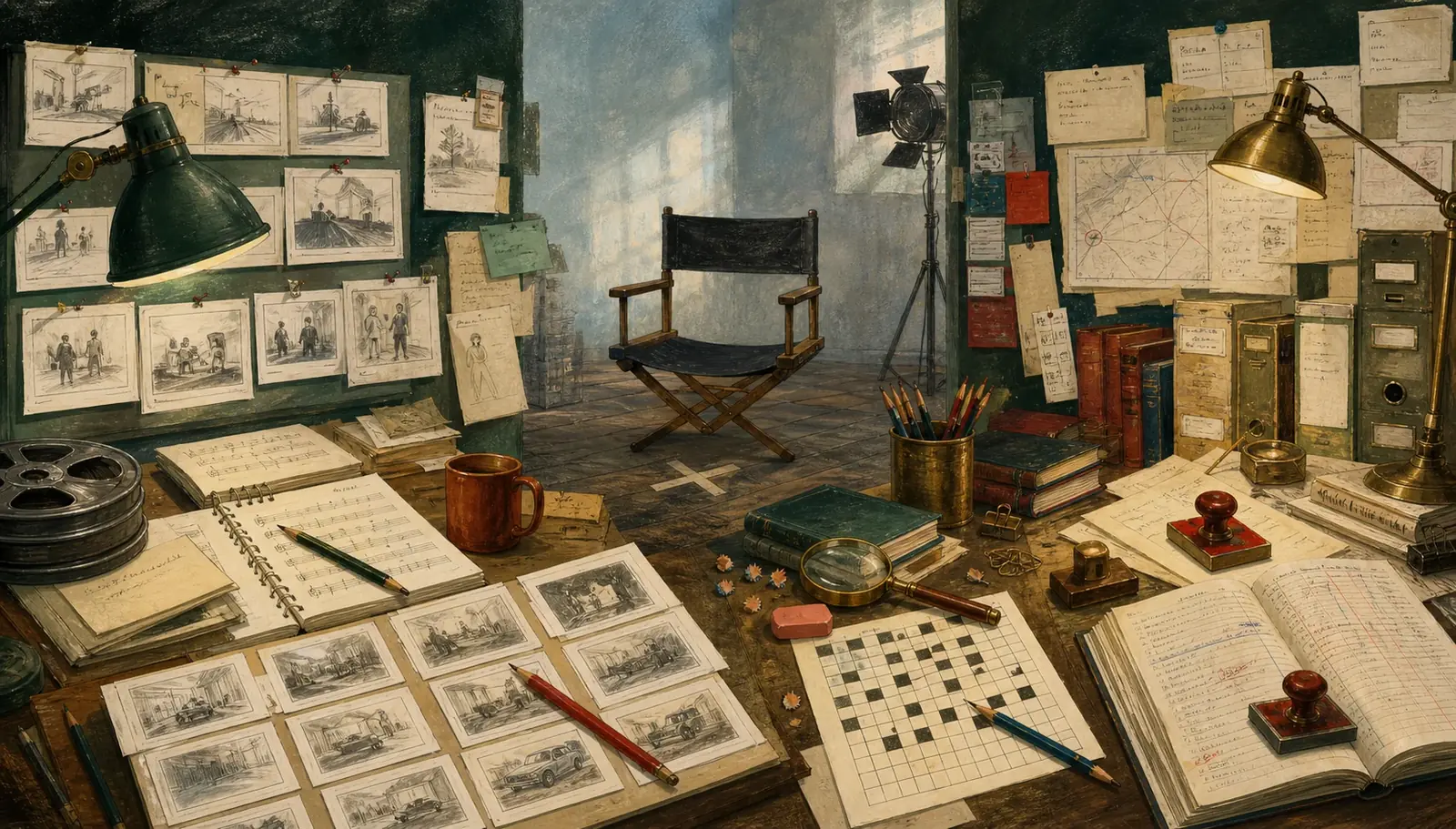
An open editorial desk with source files, classification stamps and correction ledger
Original fan artworkUnofficial archive commissionAI-assisted original fan artwork · not programme material
Open editorial desk

Classification is part of the evidence

The illustration makes checking and correction visible while the page below explains the exact standard.

Claim standard

Four states, never one grey soup

Confirmed
Visible or stated in a broadcast episode, or published by an official production source.
Supported
A traceable inference with the evidence and uncertainty stated.
Theory
An editorial or fan interpretation that remains visibly separate from canon.
Preview, casting or location information not yet recorded broadcast or primary-source verification.
Page ownership

What every guides should tell you

  • Scope: what the page covers and deliberately excludes.
  • Status: broadcast-checked, sourced production record, mixed evidence or preview boundary.
  • Review date: when the editorial record was last checked.
  • Onward source: where evidence, methodology or related records live.

The project is independently edited and unofficial. It does not imply approval by the BBC, producers, cast or rights-holders.

Performer files

Actor biography standard

Required coverage

What a full profile records

  • Identity, character and every verified episode appearance, with provisional cast listings labelled.
  • Publicly sourced early life and education, training, dated career chronology, selected roles and other creative work.
  • Awards with body, year, category, work and result; first-person Ludwig comments separated from editorial interpretation.
  • Official links, current representation, a claim-level source trail and a visible review date.
Publication gates

What must be checked

  • Compare episode appearances with the broadcast end credits, or mark them as secondary reports.
  • Resolve source conflicts, keep living-person details proportionate and never infer private facts from appearance.
  • Record portrait permissions and attribution in the image register; otherwise show a labelled placeholder and link to authorised media.
  • Check reciprocal episode links, mobile and keyboard access, 200% text, image descriptions and the corrections route.

These gates apply to each person independently. A published page is not automatically a completed biography.

Coverage, not percentages

What “complete” means here

Completion is reported as named fields, not a made-up percentage with two decimal places and a tiny lab coat.

Case recordPremise, reasoning lens and spoiler boundary.
Evidence recordObservation, episode or source, confidence and interpretation.
Production recordCredit or claim, date, scope and primary source where available.
Revision recordMaterial corrections are dated and described below.
Corrections and revisions

The visible change log

Material changes are retained here. Typographic and purely visual adjustments are not individually logged.

Series 2 availability, audience and production status updated

Rights-readiness and credit-control review completed

Every generated internal credit link was checked for a live destination; the Christmas announcement record was reconciled with the production source; generic performer search links were removed; and image policy, register, commercial firewall, approval and two-working-day takedown controls were published.

Five maintenance cycles applied

The Series 2 check date and homepage status were brought current; RSS gained the latest verified records; images now request asynchronous decoding; and footer navigation identifies the current page for assistive technology.

Crosswords, awards and international records expanded

The continuing Guardian Ludwig byline received a dated 28-item index and learning guide. Primary award records now distinguish wins from nominations, and the international distribution table separates historic licensing announcements from current availability.

Camera craft, location and preview records expanded

A first-person cinematography account was converted into a sourced visual-language feature and glossary. Series 2 locations received confidence labels, while Episodes 4–6 gained fuller preview casts without publishing unaired solutions.

Music, production, location and award records expanded

The complete Series 2 soundtrack register, preview-safe Episode 4–6 credits, the Ham filming record, Series 3 production diary, production-design source and primary International Emmy evidence were added with explicit verification boundaries.

Guest company, geography, distribution and licensing cycles applied

The first three Series 2 guest companies were consolidated; Episodes 2 and 3 gained bounded production-geography routes; Japan and New Zealand licensing records were added; and the partnership file now distinguishes publicity access from permission and lists the evidence pack required for an approach.

Five Series 2 performer cycles applied

Freshness, episode, design, licensing and research cycles applied

Site-wide review dates were corrected; Episode 3 received its post-broadcast record; the production-design account gained its three puzzle stations; the partnerships page gained a bounded official-image request; and the research hub now exposes unresolved work.

Five further review cycles applied

A dated Series 2 transmission ledger, contrasting critical-reception summary, official-media route, screen-versus-real Cambridge visitor warning and newcomer viewing guide were added. Duplicate claims, fan speculation and solution material were rejected.

Six-stage subject review completed

The planned making-the-mysteries feature was followed by five applied review cycles covering first-person interviews, production and locations, music, new recurring characters, and accessible viewing. New claims link to their evidence, analytical puzzle labels identify themselves as Casebook classifications, and reported locations remain distinct from production-confirmed places.

Christmas special and production news added

The confirmed Christmas special received a dedicated spoiler-light guide; Series 2 availability, Series 3 production status, guest casting and the homepage news desk were updated from the official announcement.

Actor directory and portrait-rights records added

Nine sourced performer files were connected to the character archive. Six Creative Commons portraits were added with creator, source and licence information; profiles without safe images retain an intentional placeholder.

Public feedback route opened

A monitored editorial address and subject-specific routes for corrections, accessibility, rights, fan art, visitor information and partnerships were added across the site.

Research, character and visitor systems connected

A task-based research hub, nine principal character files, episode-to-motif records, official visitor routes, accessibility statement and partnership evidence pack were published together.

Series production indexes expanded

Official Series 1–3 announcements were rechecked and converted into a role-by-series credit table with claim-level source identifiers.

Contextual episode links corrected

Related-file labels were mapped to their intended destinations instead of a generic repeating set of pages.

Relationship label corrected

Lucy’s relationship to Henry was corrected from “Mother” phrasing in the wrong direction to “Son: Henry”.

Completion percentages retired

Interpretive graphics labelled

Evidence, identity, geography, music and puzzle diagrams now state whether they are schematic, fan-created or interpretive.

Known limits

What still requires caution

Scene-level evidence

Many episode files remain spoiler-light and do not yet contain detailed clue tables.

Complete production credits

Every episode now has a sourced series cast register, but episode-specific guest attendance still requires end-credit checking.

Corrections channel

Contribution rules are published, but reports can now be sent to webmaster@theludwigcasebook.co.uk.

Series 2 and 3 preview information remains quarantined until broadcast or formal production confirmation.

research notes

The episode episode research structure

The empty structure is public now; episode facts enter it only after a reliable published-source review.

RecordRequired fieldsEditorial boundary
Playback baselineEpisode, edition, service or disc, territory, check date and reviewer.Different cuts are not silently combined.
SceneStart and end time, setting, participants, event and confidence.Times are copied from the checked player, never estimated.
Clue or objectFirst visible, discovered, interpreted and explained.Audience sight and character knowledge remain separate.
DeductionPremise, supporting evidence, inference and conclusion.A leap is labelled rather than repaired by the editor.
Person or accountClaim, motive, opportunity, knowledge state and contradiction.Suspicion is not guilt; synopsis copy is not scene evidence.
ContinuityQuestion opened, earlier callback, later answer and unresolved status.A question stays open until a checked scene closes it.

Opening and movement

Record the opening scene, entrances, exits, route changes and spatial constraints without inventing off-screen travel.

Language and procedure

Use concise dialogue paraphrases. Police procedure is recorded as drama first and compared with an authoritative external source only when one is available.

Solve point and alternatives

The earliest fair-play checkpoint is the first verified moment when every essential clue is available. Competing readings must cite evidence for and against.
Stop rulesNo memory-based fill, reconstructed quotation or approximate timestamp.If playback, edition or attribution cannot be verified, the field remains visibly .

Download the blank scene-audit CSV →

Credit review boundary

What the 4 September review established

Cast, production and episode records were checked for internal consistency, source labels and working profile or guide links. The Christmas-special credits were checked against the official Big Talk Studios announcement.

Casebook index

Search the archive

224 results