Official theme tune
Listen: “Ludwig Theme (Extended)”
Nathan Klein and F. Keane · Track 19 from the official Series 1 soundtrack.
Playback is supplied by Spotify and never starts automatically. Availability depends on Spotify in your region.
Ludwig’s adapted score draws on Beethoven works including Für Elise, the Fifth and Ninth symphonies, Moonlight Sonata, Coriolan Overture and the Eroica Symphony. Nathan Klein and Finn Keane composed the original Series 1 score, weaving Beethoven references into new music for the drama.
No. Beethoven is an important musical reference, but the programme’s original score is by composers Finn Keane and Nathan Klein, who draw on Beethoven’s musical language while creating new music for the drama.
A source-backed guide to Nathan Klein and Finn Keane’s score, the classical works woven into its musical language, and why Beethoven’s Ninth matters to John Taylor.
| Episode or cue | Beethoven work |
|---|---|
| Opening | Für Elise |
| Series 1 Episode 2 | Fifth Symphony |
| Series 1 Episode 3 | Moonlight Sonata |
| Series 1 Episode 4 | Ninth Symphony, first movement |
| Series 1 Episode 5 | Coriolan Overture |
| Series 1 Episode 6 | Eroica Symphony, reworked in a minor key |
Nathan Klein explains the episode choices in BBC Music Magazine’s Classical Music interview. These are the references used in the adapted score, rather than a claim that each episode simply plays an unaltered concert recording. Source.
Nathan Klein and F. Keane · Track 19 from the official Series 1 soundtrack.
Playback is supplied by Spotify and never starts automatically. Availability depends on Spotify in your region.
This separates music heard as repertoire from the composed score and from the archive’s interpretation of recurring ideas.
Evidence rule: a musical resemblance becomes a useful note only when the cue, scene and source status are recorded.
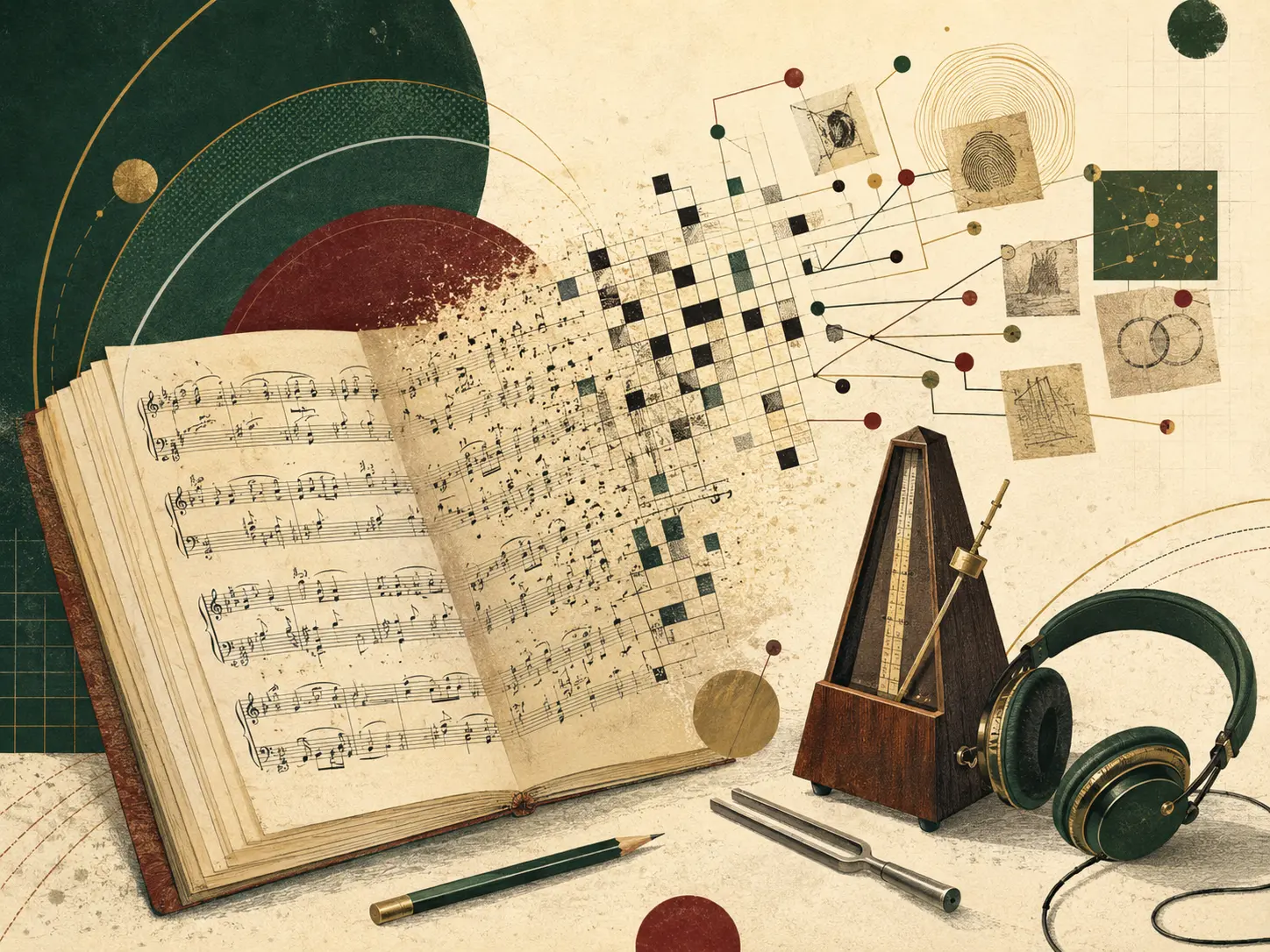
Notation dissolves into a crossword and evidence network, connecting Beethoven, repetition and deduction without pretending that interpretation is established canon.
Series 1 composers Nathan Klein and Finn Keane said Beethoven’s Ninth Symphony was central to John’s backstory and to the origin of his puzzle-setting pen name, “Ludwig”. Their score does not simply drop famous pieces into scenes: it breaks Beethoven into fragments and rebuilds those gestures around John’s mind. [M01]
The result is part detective motif, part musical puzzle—order emerging from small repeated cells.
The composers cite all four as source material. Listen for compressed rhythmic insistence, heroic scale and the Ninth’s special connection to John’s personal history.
Two sonatas whose familiar nicknames make them useful entry points—but the score draws on their atmosphere and musical vocabulary rather than treating them as simple needle-drops.
Beethoven’s instantly recognisable bagatelle supplies another fragment the television score can quote, bend or hide in plain hearing.
A concentrated dramatic overture that adds tension and forward motion to the score’s Beethoven toolkit.
Work list confirmed by Air-Edel’s interview and soundtrack announcement.
Music by Nathan Klein and Finn Keane. The 19-track, 29-minute digital album was released on 2 October 2024 by Silva Screen Records. It was recorded and mixed by Nick Taylor at Air-Edel Studios; project credits also list additional music by Harry Brokensha and orchestration by Gareth Murphy.
Sequence verified against Silva Screen’s official album record.
Nathan Klein returned for the Series 2 score, released by Silva Screen in August 2026. Track names form a miniature casebook of their own, including “Ludwig Overture”, “Labyrinth of Death”, “More Dig More Die”, “Death By Sushi”, “Murder Frame” and “Do Not Disturb”.
Beethoven gives the series more than a name. His music is built from motifs that transform, return and acquire new meaning—the same pleasure the show finds in clues. The Ninth adds a second layer: a work associated with connection and joy, written by a composer living with profound hearing loss, becomes part of the interior language of a solitary puzzle setter.
That last sentence is an interpretation by this fan archive, not a claim from the programme’s creators.
Nathan Klein’s Series 2 score was released on 20 August 2026 by Silva Screen Records. The complete track sequence is recorded below so episode research can link musical titles to the appropriate case without guessing at scene placement.
Silva Screen's album notes preserve Nathan Klein and Finn Keane's explanation that Beethoven's Ninth and John's pen name opened a route to an original score built from fragments and references across several Beethoven works.
The listening notes identify musical sources and documented creative intent. They do not reproduce score, lyrics or programme audio, and interpretive associations remain clearly labelled.
The Record Store Day 2025 soundtrack edition was a limited, numbered transparent red vinyl release with a crossword-puzzle insert. The release record credits Nathan Klein and Finn Keane. Source.
The Series 2 soundtrack by Nathan Klein was released by Silva Screen on 20 August 2026, according to Film Music Reporter’s dated album report. Source.