Puzzle Room

The props are not nonsense.

Ludwig hired Guardian crossword expertise so that the puzzles on screen would behave like real puzzles. That makes them unusually rewarding fan-archive material.
Reviewed guide · Sources & corrections
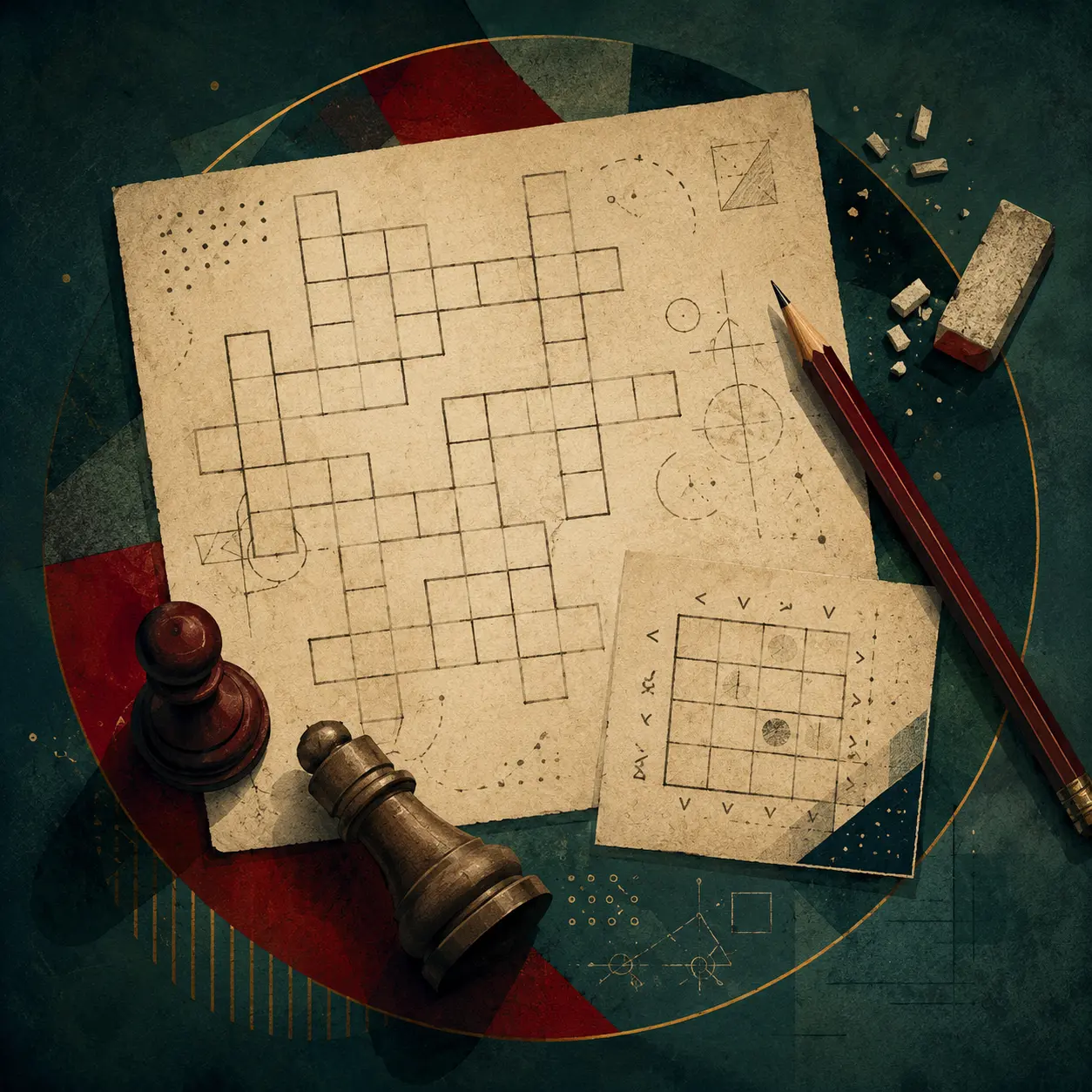
Original fan-created illustration of crossword, number-grid, geometry and chess puzzle materials
Original fan artwork · not a programme prop or still
Four reasoning modes

What a puzzle graphic should explain

LanguageDefinition, wordplay, ambiguity
ConstraintWhat values can or cannot fit
GeometryPosition, angle, route, sightline
SequenceWhich move must happen first

The archive uses original diagrams to explain principles. It does not reproduce programme frames or copyrighted grids.
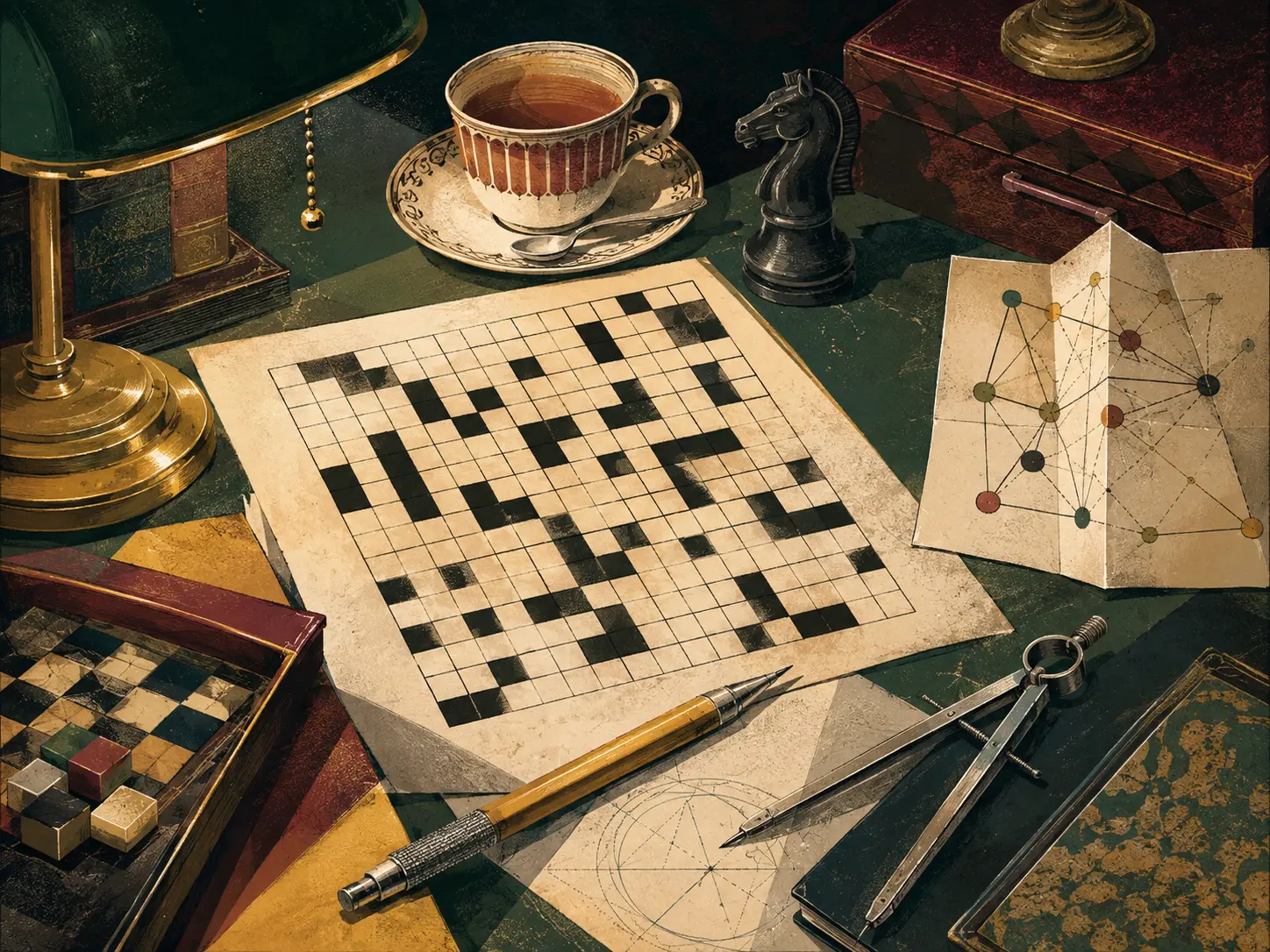
Original fan illustration of a crossword, chess knight, drawing compass, teacup and logic diagram
Original fan artworkUnofficial archive commissionAI-assisted original fan artwork · not programme material
Puzzle-setter portrait

Intelligence should look enjoyable

A crossword, chess knight, compass and branching logic diagram give the puzzle section an inviting editorial centre without reproducing an on-screen prop.

Original compositionNo actor likenessesClearly labelled
Production fact

Real puzzle consultancy

Guardian crossword editor Alan Connor worked as puzzle consultant, with setter John Henderson (Enigmatist) involved in creating authentic crossword material for the fictional “Ludwig”.

Editorial approach: describe or recreate puzzle principles in our own graphics rather than reproducing copyrighted programme frames.
Hidden in the set

Geometry everywhere

Production interviews have highlighted deliberate puzzle motifs in police-station design: chequerboards, geometric panelling, Sudoku-like tiles and visual echoes of Morse code.

Original fan puzzle · easy

John's Caesar note

A scrap on the desk reads FDPEULGJH. Shift every letter back three places in the alphabet.

Decoded: —

This mini-puzzle is original to the fan site, not taken from the programme.

Archive categories

What we'll index

Cryptic crosswords, quick cryptics, futoshiki, number grids, spatial puzzles, chess/movement logic, hidden set motifs, Beethoven references and original fan puzzles.

Guardian crossover

“Ludwig” became a real crossword byline

The fictional setter escaped the television screen: The Guardian has published crosswords under the Ludwig name. We can link readers to the originals rather than republishing the grids.

See puzzle sources →
Rating method · no case scores yet

A reproducible case-difficulty rubric

The rubric is published before any episode receives a score, so the scale cannot be adjusted to fit a preferred result.

Dimension0 points1 point2 points
Evidence availabilityEssential facts are clearly available before the reveal.One key fact is easy to miss but visible or stated.A key fact arrives late or needs careful reconstruction.
Inference loadOne direct inference identifies the answer.Two linked inferences are required.Three or more linked inferences are required.
Misdirection burdenNo substantial competing explanation.One plausible competing explanation.Several plausible competing explanations.
Space and timeNo route or timing reconstruction.A simple sequence or layout matters.Precise movement, geometry or timing is essential.
Scoring boundaryTotals will run from 0 to 8 only after the solution chain is verified.No episode is rated from synopsis copy, memory or perceived entertainment value. Equal totals may hide different difficulty profiles, so the four dimensions will remain visible beside every future score.
Casebook index

Search the archive

224 results